Germany
Pension after 45 years of contributions - sensible or unjust?
By Jan-Peter Bartels
Published September 27, 2026
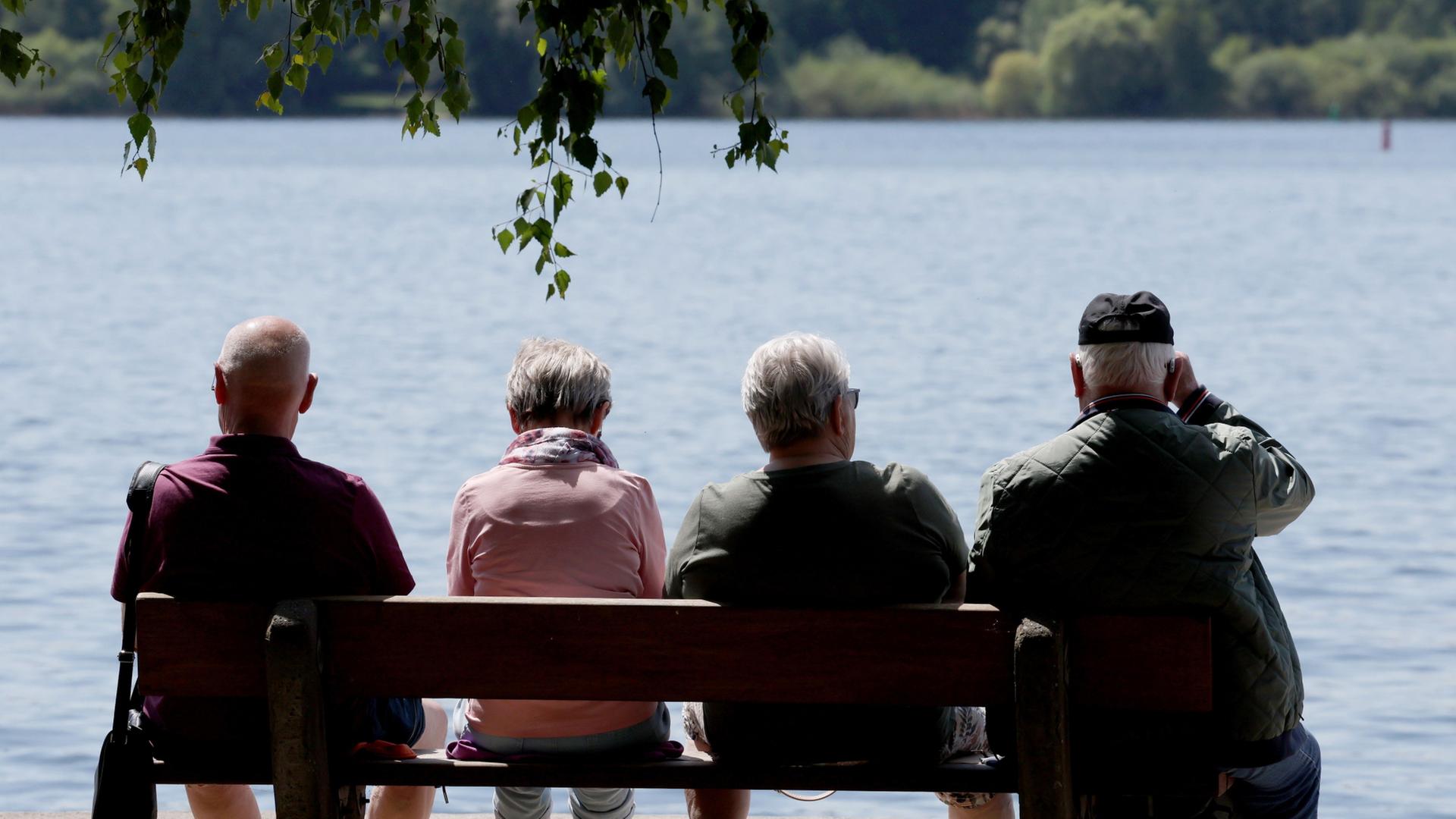
The debate on pension reform is highly emotional. But looking at the numbers makes it clear: something has to happen. Because the German pension system is under pressure.
The debate on pension reform is highly emotional. But looking at the numbers makes it clear: something has to happen. Because the German pension system is under pressure. From Jan-Peter Bartels "Despite her old age, she is still very active and regularly helps with the household," the reporter explains in a slightly admiring tone.
It is about a hundred-year-old woman from Berlin-Wilmersdorf, who is currently toasting her birthday with the mayor in a lively manner. In 1963, this was worth a television report. Today there are about 17,000 centenarians in Germany. People are getting older: in 1960, Germans received their pension for an average of 9.9 years.
In 2025, the average was 20.7 years. Actually, a great development, but a challenge for pension insurance. Because this works in the pay-as-you-go process: the money from those who work and pay in is distributed directly back to those who receive pensions. More and more pensioners, fewer and fewer contributors Longer lifetimes, however, increase the number of pensioners.
Because fewer children are born than then, fewer and fewer contributors have to pay for more and more pensioners: in 1960, for every pensioner, there were 3.79 contributors. Currently, it is still about 2.1. In 2045, it could be 1.7, the pension insurance company estimates. The pensioner ratio measures the ratio of contributors to pensioners.
In order not to get distorted figures, the German Pension Insurance (DRV) does not simply count the heads. The DRV takes into account the fact that some pay little and others a lot - and that pensions also vary. Therefore, the DRV calculates the number of so-called equivalence contributors from the range of mini-jobbers to high earners. She compares this with the number of "equivalent pensioners".
This creates an accurate picture of how tense our pension system is. Retired from 2091 only at the age of 70 At the beginning of the year, a pension commission was commissioned by the Federal Government to think about how the pension system could be better set up. Among other things, she proposes to raise the retirement age slightly on a regular basis - by about half a year every ten years. Roughly speaking, a retirement age of 68 would then apply in 2051 and from 2091 you could only retire at the age of 70.
The Commission also wants to attract additional contributors to the statutory pension: the self-employed and members of parliament should have to pay in, and in the future also civil servants. In addition, a capital pension is to be introduced as an additional pillar of the statutory pension: a small part of the pension contributions of employees is to be invested in the stock market. The end of the "pension with 63" is intended to finance the restructuring of the pension system. In the end, this should make higher pensions possible for everyone. Already in the 2040s or 2050s, pensions could be higher than if the same money only went into the pay-as-you-go system, explains Commissioner Peter Bofinger, economics professor at the University of Würzburg.
"However, the structure of the capital pension is ambitious and leads to an increase in contributions to the pension insurance," says Bofinger. This is only manageable if you make savings in the pension system elsewhere. The Commission proposes, among other things, to abolish the so-called pension at 63, i.e. the deduction-free pension after 45 years of contribution. Federal Minister of Labour Andrea Nahles (SPD) had enforced in 2014 that employees can retire two years earlier after 45 years of contributions - without deductions.
At the time, this was actually called a pension at 63. The name remained, even if the gradual increase in the general retirement age to 67 years meant that it was now a "pension at 64.5 years". Today, the "pension at 63" was used differently than previously thought, especially for those who worked hard physically, as well as in recognition of life's achievements, i.e. a long working life. Those who are unemployed or sick for longer are left out.
They can no more reach the age of 45 than those who, for example, suspend work for a longer period of time for the sake of their children. Currently, almost 30 percent of a class use the deduction-free pension. In 2025, 925,865 people retired, 262,361 of whom received the "pension at 63". Statistically, these are those with particularly high pensions: those who took them in 2025 received an average of 1,677 euros per month (after deduction from health and nursing insurance).
The general average German pensioner, on the other hand, was 1,196 euros per month. Monthly disbursement amount for persons retired in 2025Total women men old-age pensions Average1.1961.0221.383Pension after at least 45 years1.6771.4691.846Pension after at least 35 years1.2571.0791.506 An "extra bonus" that must first be financed "If you work longer, you get more pension, so your lifetime achievement is rewarded," says pension expert Bofinger.
Anyone who has worked for 45 years, for example, receives 12.5 percent more pension than someone who has worked for 40 years on the same income. For this reason, Bofinger considers it unfair that those with 45 contribution years can retire two years earlier free of charge. "These two years are an extra bonus and must be financed," says Bofinger. "Either from the contributors or from all other pensioners." The government hopes to save 10 billion euros a year. Abolishing this bonus should save around 10 billion euros a year.
Anyone who wants to retire earlier should be able to continue to do so - but only with deductions: at two years, it would be 7.2 percent less. So if you want to retire two years earlier after 45 years of contributions, the statistical average would then be 1,556 instead of 1,677 euros. However, this does not apply to those who can no longer work. For these, the Commission proposes a hardship rule.
"So if people in a certain profession can no longer be employed," says Bofinger, "then they should continue to have the opportunity to retire prematurely without deductions."