Germany
Merz and the health insurance companies - what did the Chancellor mean?
By Birthe Sönnichsen
Published September 22, 2026
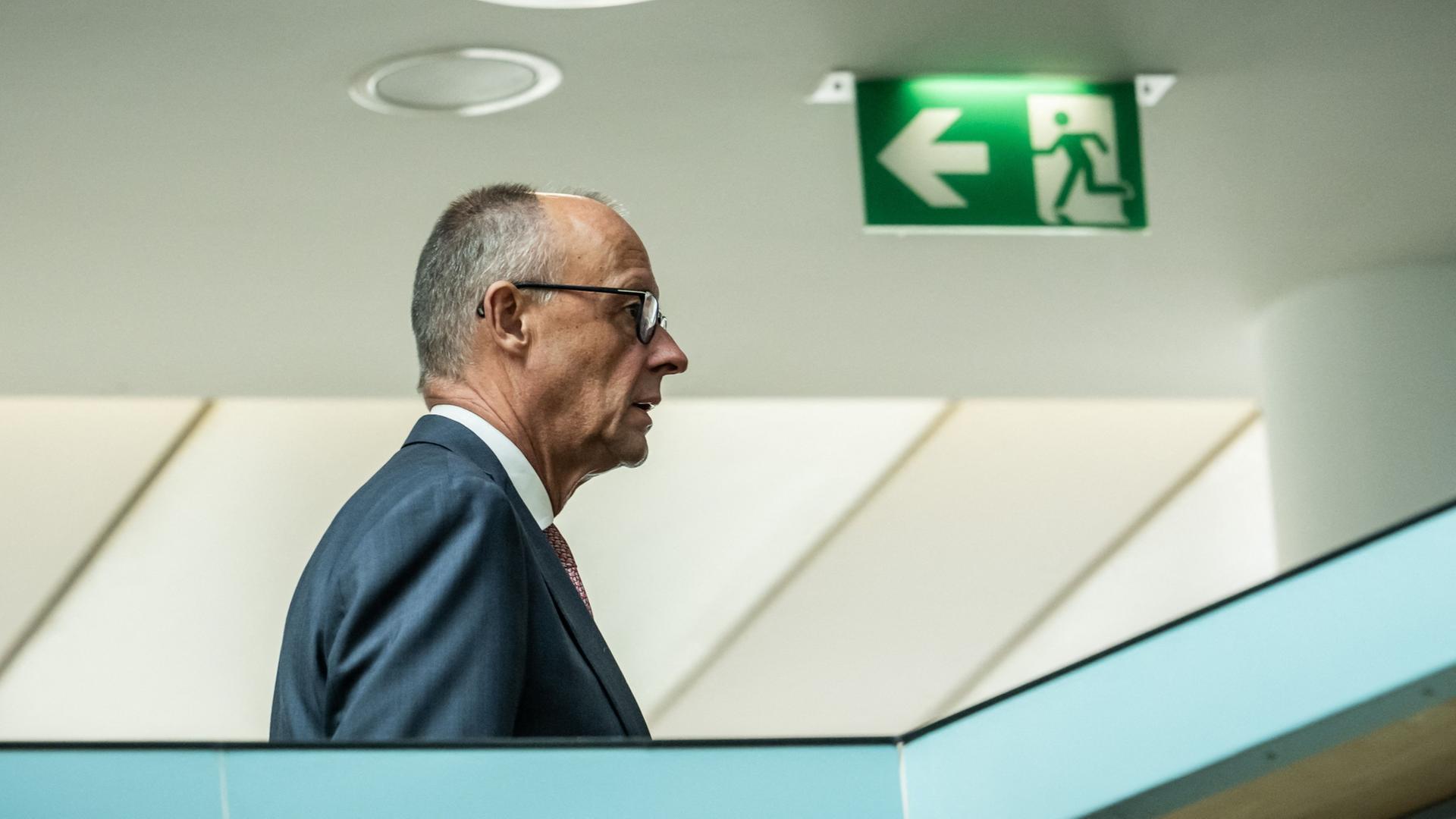
Chancellor Merz has initiated a debate with his remarks on statutory and private health insurance funds. But what was he actually trying to say - and what does that mean for the implementation of the reforms?
Chancellor Merz has initiated a debate with his remarks on statutory and private health insurance funds. But what was he actually trying to say - and what does that mean for the implementation of the reforms? By Birthe Soennichsen Friedrich Merz has identified a problem. People would obviously feel that things are no longer fair in the country.
From the chancellor's point of view, this can be seen, for example, in the doctor's office: if the impression is solidified in the population that those who are privately insured receive every benefit immediately and those who have statutory health insurance have to wait weeks and months for it, then this is exactly such a justice problem." Merz gives no details For a moment it sounded as if the Chancellor wanted the previous system of statutory health insurance and private health insurance, at least in the current form. There are good reasons for both systems, Merz emphasized, "But if the population sees this as such a massive problem, and I share the assessment, then we have to change something about it," he said. Merz said it without giving details and left the press conference. Later, others had to clarify what the Chancellor actually meant.
Union parliamentary leader Thorsten Frei, for example, said that the Federal Chancellor had not questioned the system of statutory and private health insurance. "That would not be our policy on the question either," said the leader of the parliamentary group. CDU always rejected unitary insurance. His group has been clear on the issue for many years and is clearly in favour of the previous system. The CDU has always rejected a single insurance policy - as demanded by the SPD, the Greens and the Left Party, for example.
Accordingly, some deputies from the Union and SPD were surprised. CSU health politician Stephan Pilsinger immediately warned that the debate on the abolition of private health insurance should be left to the Greens and the Left Party. Uniform insurance would not shorten any waiting time and implementation would be extremely difficult under constitutional law, he said. The Merz statement by NRW Minister of Health Karl-Josef Laumann was inspired by the reappraisal of the electoral defeats.
On Monday, the CDU Federal Executive Board also dealt with the issue of justice when processing the electoral defeats. Health care in particular drove many people around during the election campaigns, the Chancellor said. He also spoke to Laumann about this. A survey of health insurance patients at the beginning of the year showed that one in four legally insured persons in Germany has to wait more than a month for a specialist appointment.
Around a third of the respondents consider this waiting time to be too long. Laumann says that his main concern is better patient control. CDU strives for primary care "It must not be the insurance status that decides when I get a specialist appointment," he says. However, this has nothing to do with the fundamental question of the system.
The federal government has undertaken other reforms to shorten waiting times, for example through a primary care model. In the future, legally insured persons should no longer be able to go directly to the specialist, but should first visit the family doctor or make a digital replacement assessment. The aim of the reform is to avoid duplicate investigations and to ensure that urgent cases get appointments faster. In addition, the Federal Government has repeatedly agreed on a "deadline guarantee", without details having been determined so far.
Former SPD Minister of Health Karl Lauterbach proposes that doctors must treat all insured persons equally when appointments are made, otherwise there will be deductions. Then it would no longer be about the insurance status, but only about how sick a patient is. The health insurance doctors clearly reject a general statutory deadline guarantee. So far, the black-red government in the coalition committee has only agreed to introduce a "deadline guarantee for specialists" "within the framework of the implementation of the Primary Physician Act".
Many tasks for Linnemann The new Minister of Health, Carsten Linnemann, has to take care of all the laws with numerous detailed questions. The primary care model should be pretty high on his long to-do list. "If we have too many doctor contacts, compared to other states, then there must be better control here," he said. In addition, the government wants to fundamentally reform the system of statutory health insurance.
Before the summer break, she had initially adopted a savings package. The Health Finance Commission will prepare further proposals by the end of the year. "It could be a momentum" Meanwhile, SPD parliamentary leader Matthias Miersch is using the momentum to give a new impetus to an old SPD demand: citizens' insurance, a common insurance system for all. The CDU is probably not yet that far, Miersch said.
“But it could be a momentum to structurally get things on track." Ex-Minister Karl Lauterbach also sees it that way. One has to gradually move towards citizens' insurance, he said. A deadline guarantee could be an important first step. Whether intentional or not, the Chancellor has definitely launched a debate.
This should not make the implementation of the upcoming reforms any easier.