Germany
Cabinet adopts bill for digital receipt from 2028
Published September 23, 2026
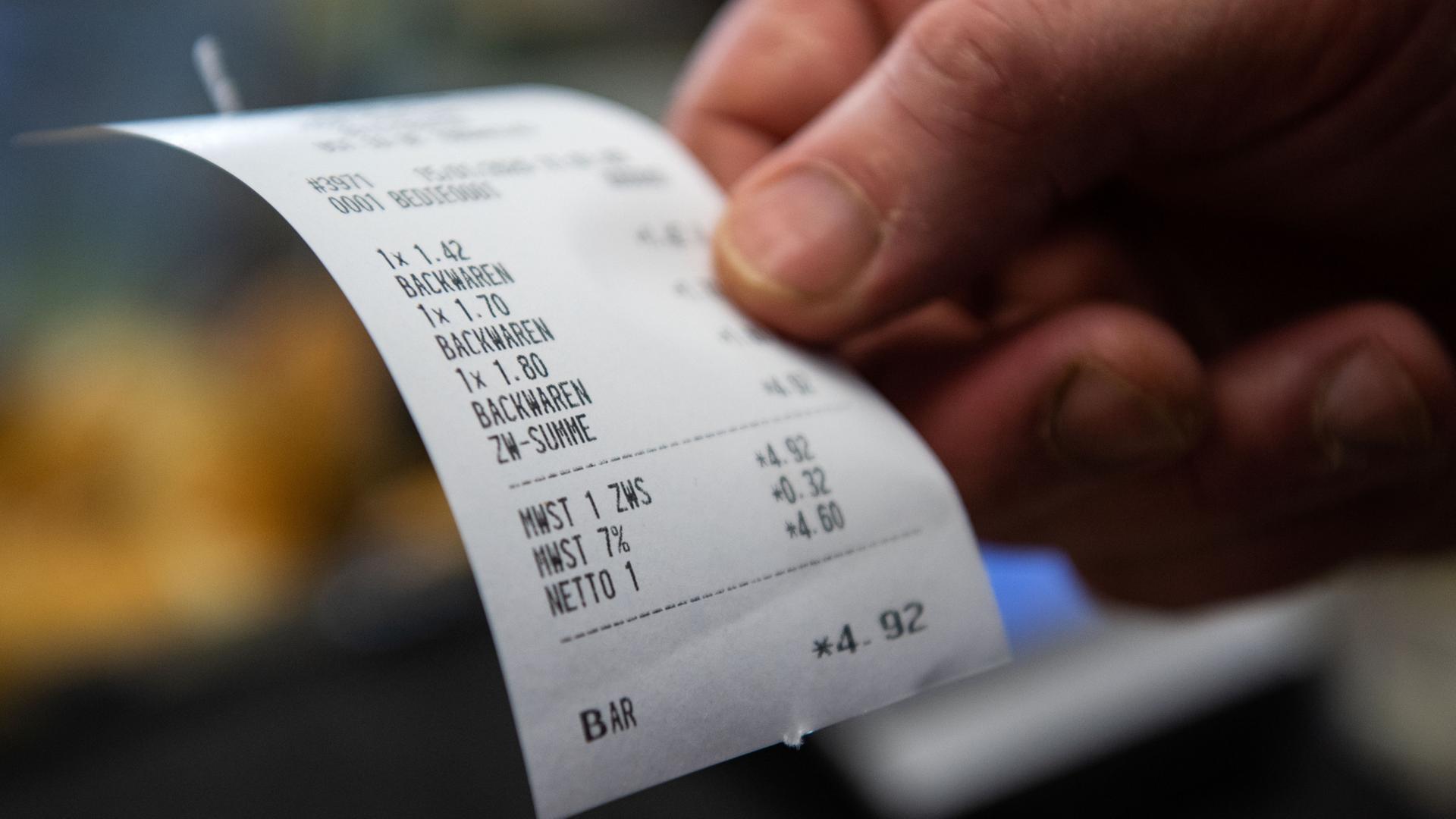
Less paperwork, less bureaucracy and also less tax fraud: this is what the Cabinet is betting on with a new bill. From 2028, receipts are to become digital. For whom there should be exceptions - and what the retail sector criticises.
Less paperwork, less bureaucracy and also less tax fraud: this is what the Cabinet is betting on with a new bill. From 2028, receipts are to become digital. For whom there should be exceptions - and what the retail sector criticises. If you go shopping, you should receive a digital instead of a printed receipt more often in the future.
To this end, the Federal Cabinet today adopted a draft law of the Ministry of Finance. Paper receipts should therefore be replaced by digital receipts from 2028 onwards - for example by e-mail or as a QR code. According to the Ministry of Finance, there will be no obligation for consumers to accept electronic receipts. "This means less bureaucracy for everyone - both for citizens and for companies," said Finance Minister and SPD leader Lars Klingbeil.
All sales would be recorded with digital cash registers. "In this way, we prevent tax evasion and create fair competitive conditions," explained Klingbeil. “I don't want the honest to be the stupid ones." Paper only on request Paper receipts should then only be available at the express request of the customers. The government hopes to save money and contribute to environmental protection by saving paper.
The law implements the agreement from the coalition agreement between the SPD and the Union to abolish the obligation for paper receipts that has been in force since 2020. In addition, there should be more digital cash registers. According to the Federal Ministry of Finance, modern electronic cash register systems are already widely used in Germany. There are still about 115,000 so-called open cash registers, some of which record revenues only by hand or not at all.
"This can promote tax evasion," the ministry explained. Exemptions in agriculture conceivable Companies with an annual turnover of more than 100,000 euros should have to use electronic cash register systems from 2028. Anyone who makes less than 12,000 euros in cash sales per year should be exempt from this. Further exceptions can be regulated by an ordinance, for example for trust funds on self-harvesting fields.
The digital association Bitkom stressed that the law means less paper for consumers. "Receipts are easier to store and retrieve." For many companies, however, the changeover initially involves a lot of effort. Uniform technical specifications are needed for the systems to work together seamlessly. Retail calls for the abolition of the receipt obligation The receipt obligation was introduced in 2020 by the then Federal Government to make tax fraud more difficult.
Especially small retailers such as bakeries or kiosks had complained about unnecessary bureaucracy and additional rubbish. The managing director of the trade association HDE, Stefan Genth, said that the abolition of the payment obligation had been agreed in the coalition agreement. "But now, as decided today in the Cabinet, simply abolishing the paper receipt and replacing it with a mandatory digital receipt is too little." For many companies, there was a risk of significant investments in an economically tense situation, "explained Genth. For larger purchases, the data volume of the receipt is too large and it would not fit the QR code.
"Therefore, the digital receipt must be transferred to a server and the customer receives a link to this server via the QR code if the retailer does not have a customer app." Some of these systems already exist - but they are expensive and need to be expanded.