Germany
High fuel prices: SPD faction vice demands excess profit tax
Published September 15, 2026
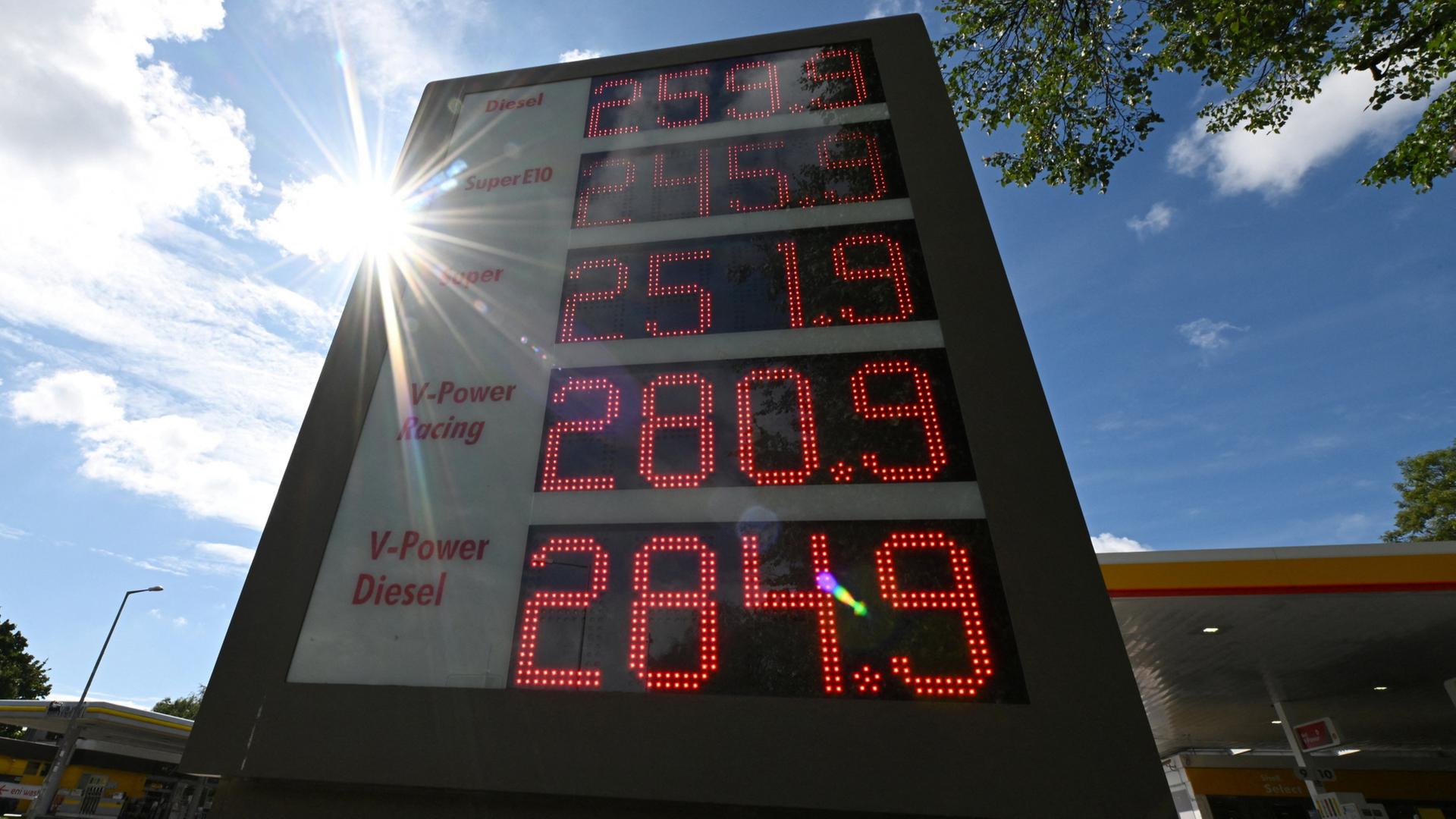
More pressure on petroleum companies and targeted measures: SPD faction deputy Zorn promises new proposals from the fuel task force "in the next few days". In view of the high fuel prices, state intervention is necessary.
More pressure on petroleum companies and targeted measures: SPD faction deputy Zorn promises new proposals from the fuel task force "in the next few days". In view of the high fuel prices, state interventions are necessary. tagesschau24: Anyone who travels by car will notice that refuelling in Germany is more expensive than ever before. Now Chancellor Merz has announced new reliefs today.
Do you know what they should look like? Armand Zorn: No, the Chancellor did not mention any details today. But at least I am pleased that we are finally seeing first movements on the part of the Union. You know, my party has been advocating for a fuel price cap as well as an excess profit tax for several weeks and months.
And now that the Union is also on the square, I am in good spirits that we will also be able to reach a compromise quickly in order to ensure a discharge. tagesschau24: What proposals did your task force make? Anger: You know that the task force has been meeting for a while and observing the situation. And it's not just about fuel prices, it's also about energy and electricity prices, about gas supply, about food prices - about inflation overall.
That's why the order is a bit broader than just the fuel prices. And now in concrete terms, I want to say honestly that there were different ideas. There is the SPD faction, the SPD as a party that advocates an intervention in the market, which advocates a burden of certain instruments - and the Union, which until now has been rather reserved and opposed. But now movement has come in, and we all agree that with the fuel price of 2.30 to 2.50 euros, it needs measures, it needs relief, it needs interventions.
And the task force will come together quickly in the next few days and make suggestions. "We need targeted measures" tagesschau24: We were already there a few months ago. Why isn't one of these measures being discussed now being implemented? Zorn: We have already tightened competition and antitrust law with the fuel measures package.
The Federal Cartel Authority now has further powers to act in the event of unfair pricing. These are certainly measures that work, even if they work too slowly. And that's why it's good that we got this started. The tank discount we introduced was a temporary relief, but it was very expensive.
And in the tense budgetary situation, it is also about using the funds in a targeted manner. That is why it is important for us to clearly focus on those who rely on the car every day, who cannot work from home, who live in a region where there is no public transport or no good offer - especially people with small and medium incomes. That's why the watering can is definitely not what we need. Instead, we need targeted measures.
"I am not satisfied at all" Tagesschau24: The task force was set up in March of this year and the working group is now investigating whether the sharp price hikes at German petrol stations compared to the rest of the EU abroad are justified at all or whether something points to inadmissible price riots. Why do you hear so little about the Fuel Task Force? Anger: I would say that you have heard something from me over the past few weeks, so at least I hope so. We have communicated again and again over the past weeks and months.
We did deliver. But we can't be satisfied with what we've delivered so far. It cannot be said that the reform of antitrust law, that the tank discount and the many other measures that we have launched are enough if you look at how high the fuel prices are. And that's why you don't find me satisfied.
But I still believe that it is and was right to have such a task force. Now we are faced with the concrete challenge of getting the next measures underway. I want to reassess this: As a member of parliament, it is my role to pass laws, but we need this more than just the German Bundestag. We need authorities such as the Federal Cartel Office, which ultimately implements the laws we have launched accordingly and protects consumers.
And that is why I am not at all satisfied, but I can also assure you that we will definitely come up with new proposals in the next few days. tagesschau24: Yesterday, the President of the Federal Cartel Office, Andreas Mundt, said that the examination of any misuse by the oil companies that may be relevant under antitrust law definitely needs time. You yourself say that you want a different appearance from this antitrust authority and also from the President. Why?
Anger: It is clear that antitrust law is a sharp sword - but also a slow one. We live in a rule of law, and we know that sometimes the rule of law takes longer. That's a good thing. Still, we live in times where markets are increasingly concentrated and dysfunctional, which are unfair.
People in my constituency in Frankfurt or elsewhere in the Republic clearly feel that it is not fair. You only have to look at the record billion-dollar profits of the petroleum companies to find enough evidence that things are not going fairly. And that is why I believe that we as a state cannot be satisfied. Nor do I believe that a president of the Federal Cartel Office can be satisfied with his own performance.
More than ever, we need to think about and look at how, beyond what we have in the law - namely about appearance, communication, expectations - we can ultimately increase the pressure on the oil companies so that they do not take money out of everyone's wallet. I would like the President of the Cartel Office and the authority itself to act differently. "The additional income should be returned" Tagesschau24: Compared to our European neighbours, the state retains a lot: for diesel, a good 50 percent, for petrol, around 60 percent of the final price. Is that justified?
Anger: The decisive factor is the question of additional revenues compared to last year. If we compare how much additional revenue the state now has due to increased diesel and gasoline prices, we will find that this is not as much as we imagine. But if you look at how much the oil companies have also made in profit, we will see that this is an enormous amount. But I believe that we should give back the extra income generated by the state.
We are currently checking what height we are talking about here. We assume that it is very manageable. But there I am, my group is of the opinion that these additional revenues should be returned. But honesty also includes: this is not what will provide a noticeable relief.
What will provide a noticeable relief is to make it clear to petroleum companies that profit must not be made on the backs of people in times of crisis. "Government intervention is justified" Tagesschau24: Are you talking about an excess profit tax? Zorn: Yes. You know our suggestions.
Excess profit tax is about skimming off the crisis profits that have arisen in the past. And the price cap, a price cap, is about limiting how high the fuel prices can rise. There are some critics who say that a fuel price cap would suppress market signals. That is not our concern at all, but to say that we want to ensure security of supply on the one hand.
And we want to ensure that market signals are still passed on in the end. But at the same time, it is about limiting the margins and record profits of the petroleum companies. And I refer to neighboring European countries such as Luxembourg, such as Belgium, which have a fuel price cap. And as far as I know, these are not communist and socialist countries.
That is why I think that even in a social market economy, state intervention is justified, and in some cases even necessary, in order to enable fair competition. The interview was conducted by Kirsten Gerhard for Tagesschau24. The interview was shortened for the written version and edited.