Germany
Q&A: What is Coalition planning now against fuel prices?
Published September 18, 2026
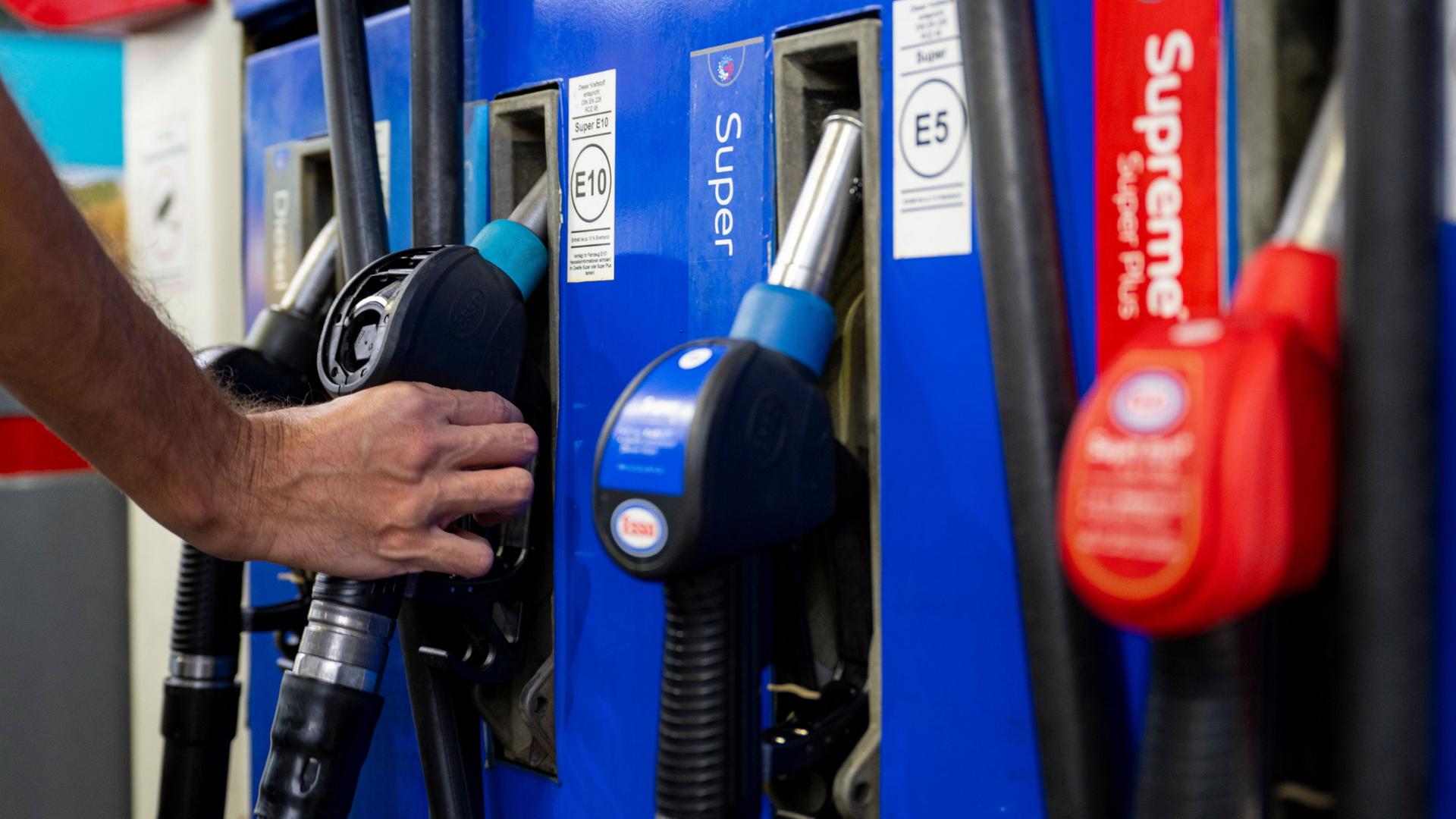
The German government has reacted to the high fuel prices. What measures are planned from when? Who prevailed in the coalition? And: What criticism is there? The most important questions and answers.
The German government has reacted to the high fuel prices. What measures are planned from when? Who prevailed in the coalition? And: What criticism is there?
The most important questions and answers. What exactly was decided? Two concrete measures are intended to cushion prices: one with a quick effect, one in the future. First, the energy tax on fuels is to be reduced by 14 cents per litre.
Including VAT, this results in a tax reduction of 17 cents per litre. The federal government had already applied the same principle to the tank discount in May and June. The new tank discount should already be decided on 1 October and apply until the end of the year.
The second measure is a new one: the federal government wants to talk to the petroleum industry about a fuel price cap. The aim is to introduce it by 1 January at the latest, the Federal Government explained. Similar government regulations already exist in Luxembourg and Belgium.
In addition to the tank discount and the fuel price cap, further measures to relieve the burden on citizens are apparently being discussed in the future. According to the decision, at the beginning of 2027, further "targeted measures for citizens affected by the crisis (especially those with low and middle incomes) and companies" are to be examined. How could the fuel price cap work? The design of the fuel price cap, i.e. the introduction of a maximum price for fuel, is still open.
The top price for petrol and diesel could, for example, be based on the development of oil prices and costs for transport and distribution. The Federal Government initially made it clear that it should not apply permanently and that security of supply had to be guaranteed. What are the benefits of the measures at the pump? The tank discount in early summer has noticeably lowered fuel prices, but according to analyses, it has not been fully passed on to consumers.
According to the Munich Ifo Institute, this was especially true for diesel. While the relief in the case of the Super E5 and Super E10 arrived almost entirely at the fuel pumps, in the case of the diesel only an average of twelve cents per litre was passed on - significantly less than the 16.7 cents by which the tax was reduced. After the discount expired at the end of June, prices rose again. There has not yet been a price cap in Germany.
As long as no details are known about the design, the effect is difficult to assess. A price cap below the market price could lead to immediately falling costs at the petrol station - but also to supply problems if sales and imports are no longer worthwhile. It is also unclear whether the state will take over the difference or the oil companies. If you cannot sell to Germany to cover your costs, you may be selling to other countries.
Who has prevailed in coalition poker? Chancellor Friedrich Merz (CDU) had put his own coalition under enormous pressure with his announcement: On Tuesday, he had said in a speech that the government had to act on fuel prices. After that, tough negotiations began - because the Union and SPD had completely different ideas - and the countries also wanted to be on board this time. The result was a compromise: the SPD has been calling for a fuel price cap for months - it is now getting it.
In addition, however, Finance Minister Lars Klingbeil (SPD) is pushing for a European excess profit tax to be paid by mineral oil companies on their sharply increased profits. Here, the coalition merely renewed an inspection order from April. The EU Commission has already rejected Klingbeil: "At the moment, we are not submitting an EU-wide proposal," said EU Economic Commissioner Valdis Dombrovskis at a meeting of finance ministers in Dublin. The tank discount is now more of a Union favorite - though not its first choice.
Economy Minister Katherina Reiche (CDU) was even against a tank discount and argued for a direct payment to low-income citizens. However, this is not yet technically feasible. Why is VAT on fuel not being reduced? The second proposal from the Union, the reduction of VAT on petrol and diesel from 19 to seven percent, was also apparently rejected.
According to the calculation of tax expert Stefan Bach from the German Institute for Economic Research, at a fuel price of 2.30 euros per litre, this would mean a price reduction of 23.2 cents - more effect than the tank discount. However, EU regulations do not allow for a reduction in VAT on fuels. In addition, many companies would not have benefited from such a measure. How much do the state and countries charge for the plans?
The Federal Government expects a relief for citizens of around 2.5 billion euros. Ultimately, however, the volume will depend on whether it is really possible to implement the tank discount on 1 October. This is because deadlines must be shortened in the Bundestag and Bundesrat.
What is new and special is that the countries are significantly involved. According to the decision, they will cover half of the costs with 1.25 billion euros over a fixed VAT amount. We are talking about a joint effort. The two-month tank discount in early summer cost the federal government around 1.6 billion euros.
When it expired, a member of the task force of the coalition groups stated that it had worked, but that a continuation would not make sense from a fiscal point of view. What are the reactions? The German Farmers' Association has welcomed the announcement of a new edition of the tank discount. Reducing the energy tax on fuels in the short term is the right thing to do, said farmer president Joachim Rukwied.
Criticism of the move, on the other hand, came from environmentalists. "A tank discount is not targeted, harmful to the climate and a big chunk of it ends up as an excess profit in the pockets of the oil companies," criticised the environmental organisation Greenpeace. In fact, the petroleum companies are not obliged to pass on the tax cuts to end customers. Ramona Pop, head of the German Consumer Association, criticised the new edition of the tank discount as not being sufficiently targeted.
"The federal government is once again using a watering can. This is expensive, short-sighted and not very precise," she told the Rheinische Post. The Ifo Institute also sees no incentive to save fuel with a tank discount. How much have fuel prices risen?
The ongoing crisis in the Middle East has driven fuel prices in Germany from record to record in recent months. The price of diesel climbed to another high on Thursday. According to the ADAC, a litre cost an average of 2.471 euros per day nationwide, almost two cents more than the previous day. On the other hand, after several price records in a row, the Super E10 was reduced to a minimum of 2.308 euros.
The trigger for the recent price increase was the situation in the Persian Gulf: Iran has been restricting shipping through the Strait of Hormuz, which is important for supply, for months. In addition, the world's largest oil exporter Saudi Arabia had to shut down an important pipeline after drone attacks. With information from the dpa.