Germany
Bundestag and Bundesrat decide on another "tank discount"
Published September 25, 2026
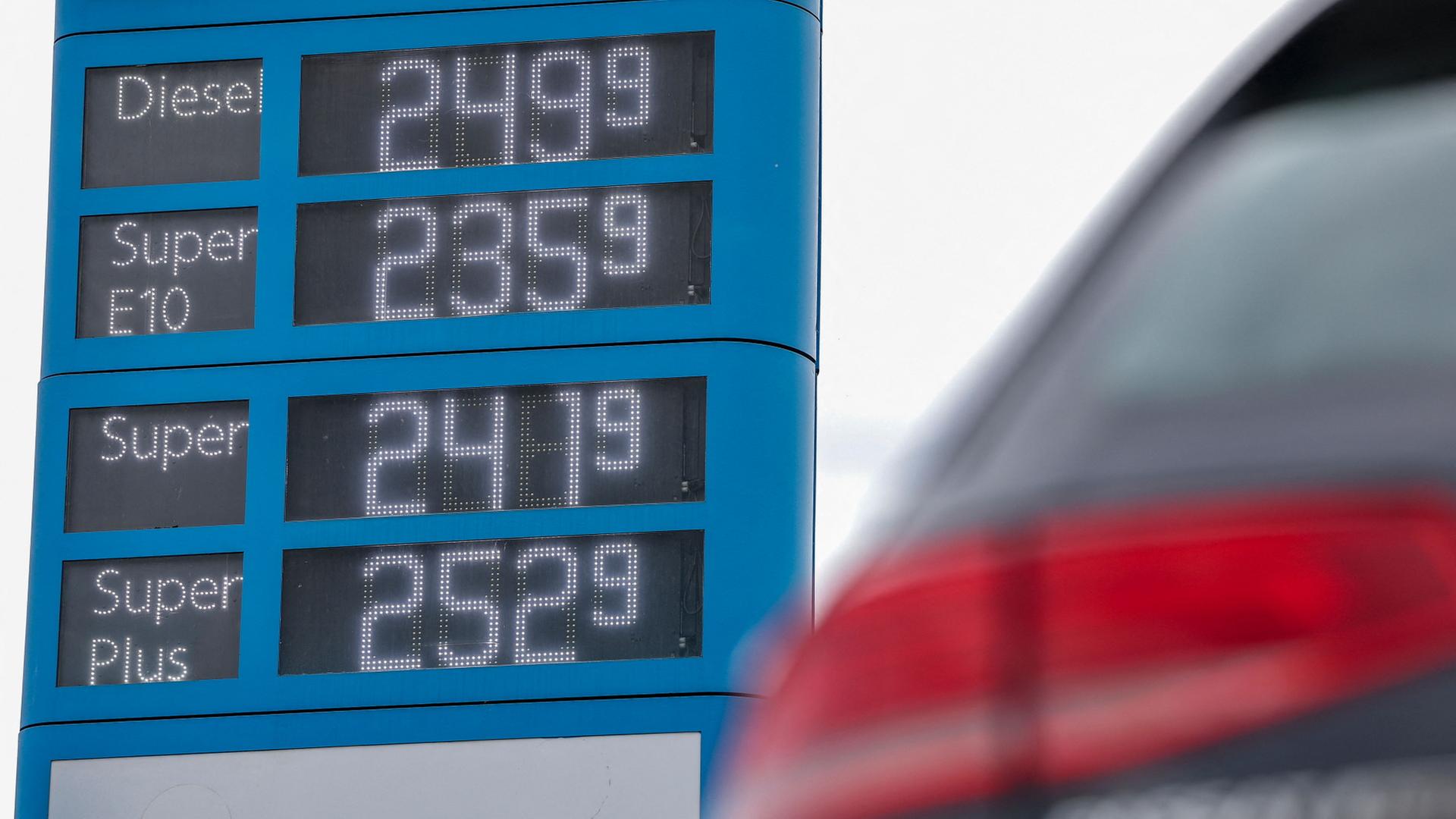
The "tank discount" is coming back. This time, the price reduction is even valid for three months. This is good news for motorists, freight forwarders and farmers. However, there are also criticisms of the measure.
The "tank discount" is coming back. This time, the price reduction is even valid for three months. This is good news for motorists, freight forwarders and farmers. However, there are also criticisms of the measure.
The high fuel prices will be pushed down for three months by a state-subsidized "tank discount". After the Bundestag, the Federal Council also gave the green light for the discharge. In a roll-call vote in the Bundestag, 434 of 562 members of the Bundestag voted in favour and 128 against. The Federal Council refrained from calling the Conciliation Committee.
In order for the law to enter into force on 1 October as planned, it now needs to be signed by Federal President Frank-Walter Steinmeier. The law reduces the energy tax on diesel and petrol by 14.04 cents per litre. VAT results in a total relief of 16.7 cents per litre.
As a result, the state is expected to incur tax losses of up to 2.5 billion euros, half of which will be borne by the federal and state governments. The Union and the SPD had agreed on a relief package in mid-September following an announcement by Chancellor Friedrich Merz. In order to be able to quickly start the "tank discount", the tax regulations in the Bundestag were attached to a project that was already up for vote - the Insurance Reorganization Settlement and Supervisory Change Act. The regulation does not include an obligation for the petroleum industry to pass on the tax cut in full to petrol station customers - but the coalition made the expectation clear.
Union and SPD have now also agreed on a "fuel price cap", which should limit the scope for price increases. However, this is not to come as a crisis instrument until the beginning of 2027. "The best quickly available instrument" Federal Minister of Economics Katherina Reiche said that the "tank discount" was not an ideal solution. However, the government cannot turn a blind eye to the fact that many motorists and smaller companies are under considerable pressure.
It was important to her that the countries not only demanded relief, but also made a contribution. "This is happening now," said the CDU politician. The CDU finance politician Stefan Korbach said that high prices hit private households and burdened businesses. The "tank discount" has an "immediate" effect on the pump and can also dampen inflation.
Although the measure is only a "plaster" that does not cure the cause, it is the best available instrument for the current situation. The SPD parliamentary group deputy Armand Zorn spoke of a "hard discussion" in the parliamentary debate. However, in view of the massive increase in prices for diesel and petrol, the decision for a "tank discount" will immediately have a relieving effect on people's everyday lives. Criticism from the opposition Clear criticism came from the opposition of the Greens, Left Party and AfD.
Green Group leader Katharina Dröge called the temporary tax cut "a bullshit solution". It had not been passed on in full in May and June and cost as much as the sum of all cuts to family benefits in the federal budget for one year. The AfD economic politician Leif-Erik Holm said that the state itself was a beneficiary of the high petrol station prices. The discount is a consolation pavement and not a solution.
"The government levies on fuels, which are already too high, must be permanently reduced." The requirement that petrol stations are only allowed to raise prices once a day at 12 noon does not help either: "The rule has not lowered prices, but increased them and should be abolished." Demands from the federal states Demands for a more comprehensive approach come from the federal states, and high energy prices. The "tank discount" is important for the people, said Mecklenburg-Western Pomerania's Prime Minister Manuela Schwesig in the Federal Council. “But it won't be enough. In my opinion, the fuel must be under two euros again." The fuel price cap and a tax on "extremely maximized" corporate profits are needed, according to the SPD politician.
Democracy only remains stable if people feel that the state supports it. Thuringia's Prime Minister Mario Voigt also said that the fuel price had to be below two euros per litre again. The CDU politician also called for a holistic approach and stressed: "Energy policy is the social issue at this time." Unlike with the end of the "tank discount" and now the restart, it needs "reliability instead of stop and go". Voigt called for a suspension of national CO2 pricing for fuels in the current high-price phase.
The head of the CSU and Bavarian Prime Minister Markus Söder said that a "big package" was needed. It cannot be that German politics fluctuates back and forth every three months, whether it intervenes or not. A regulation is necessary in the long term. Söder demanded: "We have to talk about CO2 pricing and all the price rules that make energy in Germany more expensive." It is also correct to "bury instruments that have not worked".
The rule that petrol stations are only allowed to raise prices once a day at 12 noon did not provide relief. Experts criticise the lack of incentives to save fuel Prior to this, several environmental and social associations had critically assessed the fuel relief. The economic expert Claudia Kemfert from the German Institute for Economic Research spoke of a wrong answer to high energy prices: The measure is not targeted, expensive and offers no incentives to save fuel. It subsidises fossil dependencies and is a "step in the wrong direction" for climate protection, according to Kemfert.
Tax losses of up to 2.5 billion euros would be better invested in local and regional transport, said Jan Görnemann, Managing Director of the Federal Association of Local Rail Transport. The sum corresponds to about one year of Deutschlandticket. However, the government has also chosen the measure to reach people in the countryside, where there are no good alternatives to the car.